

AI Sprite Generator for Godot
A sprite animator that brings a static sprite to life in one step: write a motion prompt or pick from 641 motion presets across 34 categories, then export a packed, engine-ready sprite sheet or GIF.
How does an AI sprite generator for Godot work?
An AI sprite generator for Godot turns a text prompt or reference image into animated character sprites and sprite sheets in Godot-ready formats. With Ludo you describe a character, generate idle, walk, run, and attack cycles, and download a packed sprite sheet you can import straight into Godot's AnimatedSprite and SpriteFrames.
Animations generated with Ludo
Each of these started as one static image. The motion is generated.
From Ludo to an AnimatedSprite2D
Ludo's grid spritesheets map one-to-one onto Godot's "Add Frames from Sprite Sheet" importer.
Export the spritesheet
Choose your frame count in Ludo (4, 9, 16, 25, 36, 49 or 64) and download the transparent PNG sheet. A sheet is not always a square grid, so read the layout from the file name, which records the frames, rows and columns. The frame count is a maximum, so a clip can come back with fewer frames; the file name still gives you the grid.
Add an AnimatedSprite2D
In your scene, add an AnimatedSprite2D node and create a new SpriteFrames resource on it.
Add frames from sprite sheet
In the SpriteFrames panel choose "Add Frames from Sprite Sheet", select the PNG, and set the horizontal and vertical counts to the columns and rows in the file name. If the clip has fewer frames than the grid has cells, deselect the empty cells at the end.
Crisp pixels and playback
For pixel art set the texture filter to "Nearest" (project-wide or per-node). Set FPS on the animation and call play(). Hydra sheets also come with a sound effect you can download and play with an AudioStreamPlayer.
Ludo lives where you build
Every generator in your terminal, your AI agent, your own code and the Unity editor. One account, one set of credits.
Explore developer toolsnpm install -g @ludoai/cliMCP serverAny MCP client, including assistants that can't run commands.https://mcp.ludo.ai/mcpREST APIYour own app, game server or pipeline.https://api.ludo.ai/api/Unity pluginGenerate and import assets inside the Unity editor.Walk cycles from a named preset
A walk cycle is the loop a character plays every time it moves, and the preset library has a whole category of walks, from standard and stealth walks to limps, strafes and a march, with crouched, stair, weapon and zombie walks elsewhere in the library. Pick one, choose a camera perspective and a compass direction, and the walk comes back on your own sprite as a loop-ready sprite sheet. For the full steps, see how to make a walk cycle.
Open the Walk Cycle Generator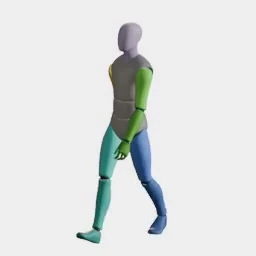
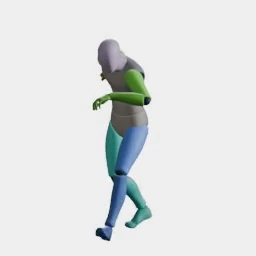
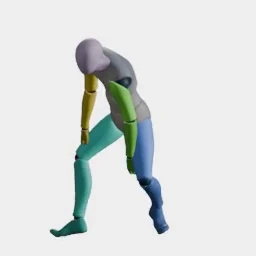
What devs build with it
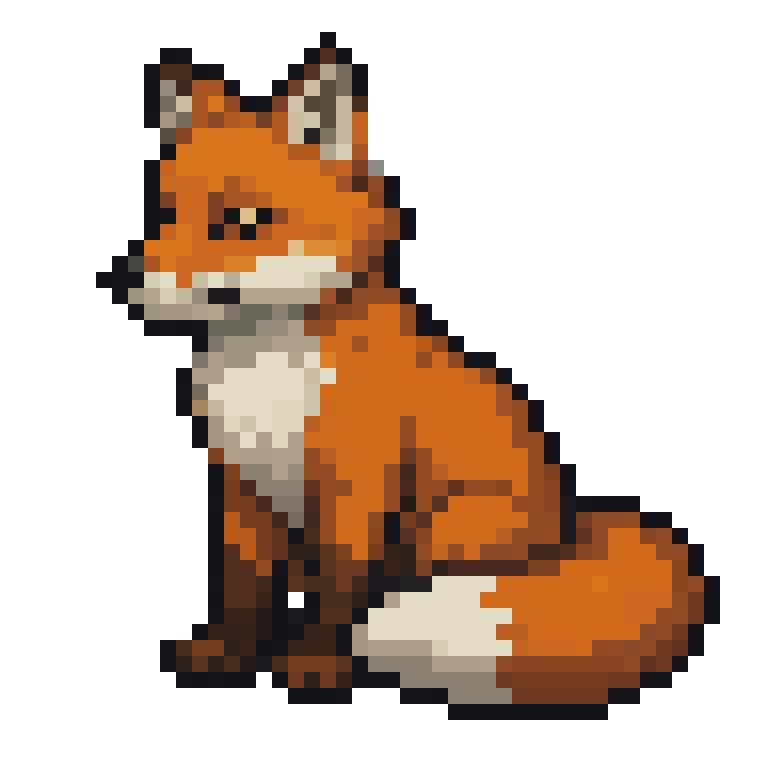
Animate commissioned art
One character image becomes every movement cycle. The static pixel art fox on the left is the only input.
Consistent enemies and NPCs
Motion transfer: pick a preset once, apply it to anyone. The adventurer and guard are both driven by the exact same wave preset, with no rigging and no per-character animation work.
VFX and impact frames
Explosions, slashes, and hit flashes as frame sequences.
FAQ
How do I import an AI-generated sprite sheet into Godot?
Add an AnimatedSprite2D node, create a SpriteFrames resource, choose "Add Frames from Sprite Sheet", select the PNG, and set the horizontal/vertical frame counts to match the grid you exported from Ludo.
Does it work with Godot 4 and Godot 3?
Yes. Ludo exports standard transparent PNGs, so they work in Godot 4 and Godot 3 alike, whether you use AnimatedSprite2D, AnimatedSprite, or AtlasTexture-based workflows.
How do I keep pixel art crisp in Godot?
Set the texture filter to "Nearest", per node in Godot 4 (CanvasItem > Texture > Filter) or project-wide under Rendering > Textures > Default Texture Filter. That keeps Ludo's pixel art sharp at any zoom. In Ludo, use one of the pixel art styles (Micro Pixel, 8-Bit, 16-Bit, 32-Bit or Free Pixel) and export in Pixel Art mode, which scales with nearest-neighbor.
Should I use AnimatedSprite2D or AnimationPlayer in Godot?
Both work with Ludo sheets: AnimatedSprite2D with SpriteFrames is the fastest for simple loops, while AnimationPlayer gives you keyframe control when the sprite animation needs to sync with other Godot properties.
Can I automate sprite generation in my Godot pipeline?
Yes. Ludo's REST API, MCP server and CLI (included with Pro and Studio) let you script asset generation outside the editor and drop the PNGs straight into your Godot project folder, where Godot reimports them automatically. Results from the API, MCP and CLI are kept for 7 days, so download them when a job finishes.
Is there a Ludo plugin for Godot, and what about the JSON export?
No. Unity is the only engine Ludo has a plugin for, so with Godot you import the exported PNG sheet as above. The sheet-plus-JSON export uses the TexturePacker format that Phaser, PixiJS and Cocos2d read; Godot's SpriteFrames importer works from the grid, so the PNG and the rows and columns in its file name are enough.
Do I own the sprites I use in my Godot game?
Yes. You own the assets you generate with Ludo and can use them however you like, including in commercial Godot games.
Experience the future of game creation
Free to try. No credit card required.