Directional Sprites: One Consistent Character in 8 Directions, in the 2D Style You Pick#
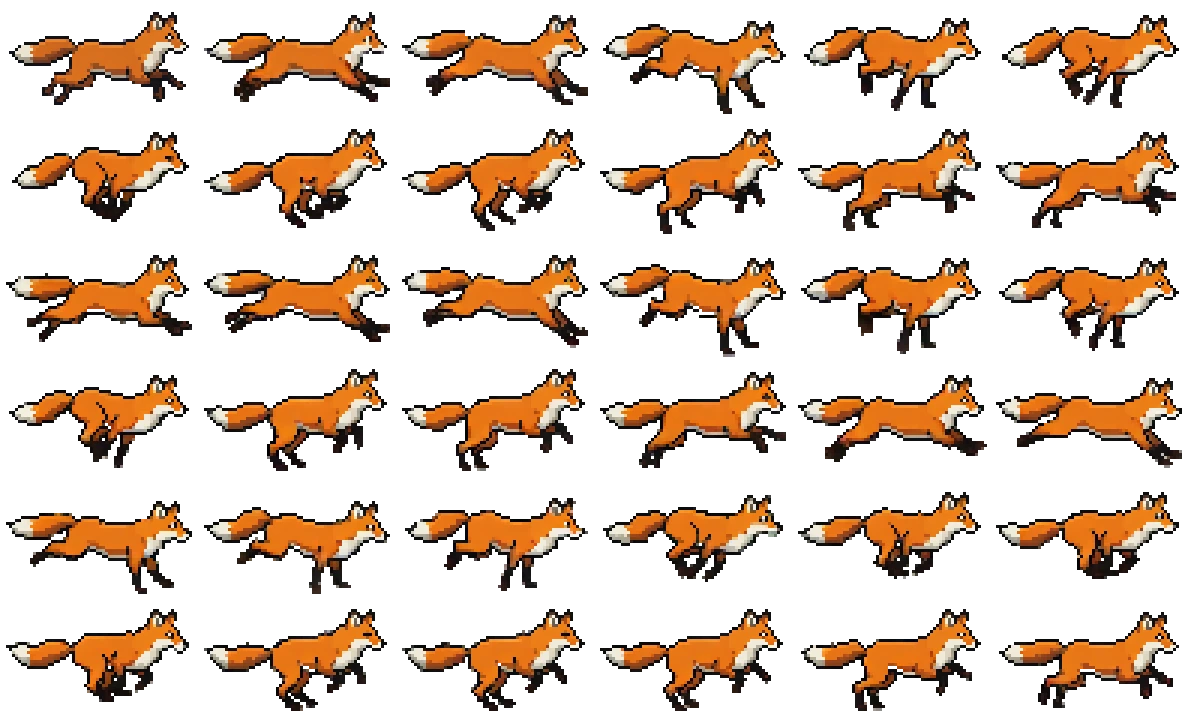
Directional Sprites is a new tool in Ludo, now in beta. Describe a character, pick a 2D style, and get animated sprite sheets of it from every direction a top-down, isometric or side-on game needs: up to 8 views, each its own sheet.
The big win is consistency. Every sheet is rendered from one 3D model of your character, so all eight directions match: the same outfit, the same proportions, the same scale, standing on the same floor. It holds across animations too: the walk, the run and the attack all come from that same model in the same look, so a whole moveset fits together. Behind the scenes, Directional Sprites builds a rigged model, renders every view from it, and draws your style on top.
And because each sheet is rendered rather than animated from scratch, at the promotional price it costs about a tenth of a Sprite Generator animation, and it comes back about three times faster.

Step 1: Character
Type a description under Describe your character and click Generate Images. The images land in the gallery below the form, and the first one is picked for you. Prefer another? Click Make 3D Model on its card.
Then set up the model:
- 3D Model: Prop is the low-cost option, Hero is highly detailed.
- Rigging: Humanoid rigs your character so it plays the walk and the whole preset library. No rigging renders still poses.
- Camera Height: Horizon, Low, Isometric, High or Top, from side-on to straight down.

Click Generate and Render. In a minute or two your character comes back as a rigged 3D model, already walking.

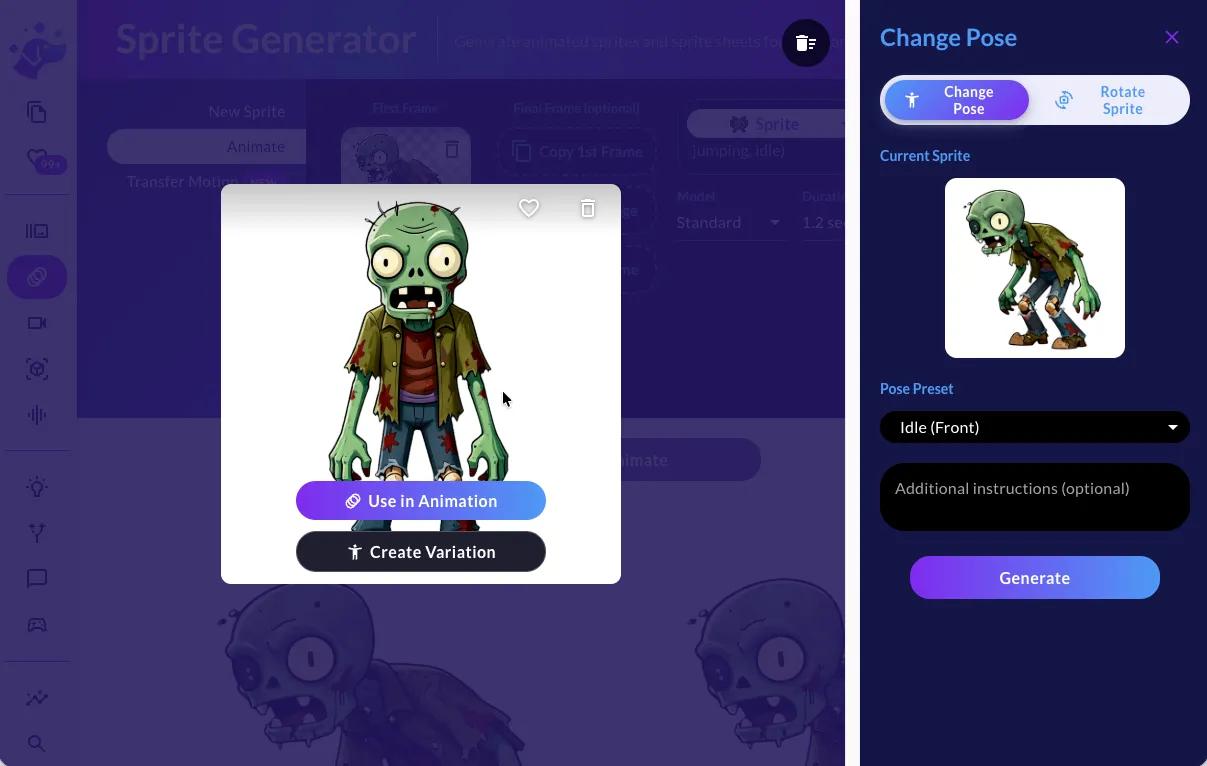
Already made a model in the 3D Generator? Open it and click Make Sprites to bring it straight in.
Step 2: Style
Pick how your sprites are drawn. There are 14 styles: Retro pixel art, Pixel art, HD pixel art, Anime cel, Soft cel, Cartoon, Flat colour, Hand-painted, Watercolour, Comic ink, 3D render, Stylised 3D, Animated film and Retro 3D.

The model stays the same, only the look on top of it changes. Each style has a few settings of its own, like Ink lines and Brush texture for Hand-painted, and Copy style from... gives this character another one's style, settings and camera height, so a whole cast matches. The Quick preview walks your character in the style as you change it, for free.

Step 3: Sprites
Choose the Animation. It starts on a walk; click Change to pick any move from the preset library, from attacks and runs to overhead slashes and spin kicks. Every preset is a humanoid move, so it plays on characters Ludo recognizes as humanoids.

Then pick the Views on the compass, one at a time or with 4 sides and All 8, and adjust the Height if needed. Horizontal travel is off by default, which keeps the character on the spot the way a game engine expects. Sprite Size (Max by default), Max Frames (36) and Loop (Auto, Seamless loop or Play once) finish the setup, and the Quick preview shows a few frames of every picked view, for free.

Click Render 8 Sprite Sheets. Each direction comes out as its own sheet, all at the same scale, ready for your game.

Export has two options. Animation Pack brings several of the character's animations to the same size and ground line and downloads them as a ZIP of spritesheets, as spritesheets with a TexturePacker-format JSON (Phaser, PixiJS, Cocos2d), or as individual frames. Animation Sequence chains animations into one sequence with the frames aligned. The sheets also show in the Sprite Generator, under Open in Sprite Generator.
Moves the presets don't cover
For spells, effects or anything else, switch the Animation to Still pose and render a still of your character in the style and the views you want. Stills are images, so you can use one as the first frame in the Sprite Generator and describe the move.

Credits and speed
- The 3D model: 5 credits with Prop and 16 with Hero, rigging included.
- Previews in every step are free.
- Sprite sheets: 1 credit each at the promotional price. A full set of 8 directions costs 8 credits.
- Stills: 0.5 credits each.
For comparison, one animation on Hydra, the Sprite Generator's default model, is 9 to 15 credits, so at the promotional price a sheet costs about a tenth of that. A full set of 8 directions made in the Sprite Generator, one animation plus seven New Direction runs, would come to 72 to 120 credits; here it is 8.
It is quicker too: a sheet typically renders in about 30 seconds, where a Hydra animation takes about a minute and a half. Making the 3D model is a one-time step of a minute or two per character.
Try it
Open Directional Sprites from the sidebar, describe a character, and click Generate Images. Pick one, hit Generate and Render, choose a style, and render all eight directions.
Show us your characters walking every way on Discord!