Abduct 'Em: Taking an Isometric Roguelike From Concept to Steam
- Platform
- Steam (PC)
- Genre
- Sandbox roguelike
- Ludo Tools
- Ludo Score, Image Generator, 3D Generator
Abduct 'Em is an isometric sandbox roguelike developed by SIFOR, a studio at the forefront of AI-integrated game development. In this title, players take control of highly upgradeable UFO abilities with one mission: harvest, destroy, and survive.
While the game is a whirlwind of neon-tinted destruction and frantic physics, the process behind it was surgical. To build a game that could scale and resonate with a global audience, SIFOR integrated Ludo.ai into every major phase of production, from market validation to final asset creation.
The Challenge: Balancing Content Depth with Market Appeal
For any indie studio, the "pre-production trap" is real: spending months designing mechanics and characters only to realize the core concept lacks a clear audience or sufficient content depth. SIFOR needed to ensure that Abduct 'Em didn't just look good, but that its gameplay loop, focused on abduction and destruction, was backed by data-driven design.
Beyond the numbers, the studio faced a massive creative hurdle. Building a living, destructible world requires an immense volume of environment props and character variations. Hand-authoring every single element would have traditionally required a much larger team and a significantly longer timeline.
The Solution: Data-Driven Design and AI-Powered Asset Pipelines
SIFOR turned to Ludo.ai to act as a force multiplier for their creative team, utilizing the platform's suite of research and generation tools to streamline the entire development lifecycle.
1. Pre-Production & Market Resonance (Ludo Score)
Before a single line of code was written for the prototype, SIFOR used Ludo Score to analyze the game's core concept. By iterating on various gameplay elements through the platform, the team was able to identify which features, such as specific mission types or environmental themes, would resonate most with larger audience segments.
This data-driven approach allowed SIFOR to confidently expand the game's content scope, ensuring the final product offered the depth players expect from a modern roguelike.
2. Character & Environment Generation
The star of the show, the player-controlled UFO, was conceptualized and generated using Ludo's Image Generation tools. This wasn't limited to just the hero asset; Ludo was used to populate the world with a vast array of environmental props.
"Ludo AI helped with generating the main UFO character along with many props in the environments, giving us a cohesive visual language from day one."
Ali Al Hamwi, Founder, SIFOR
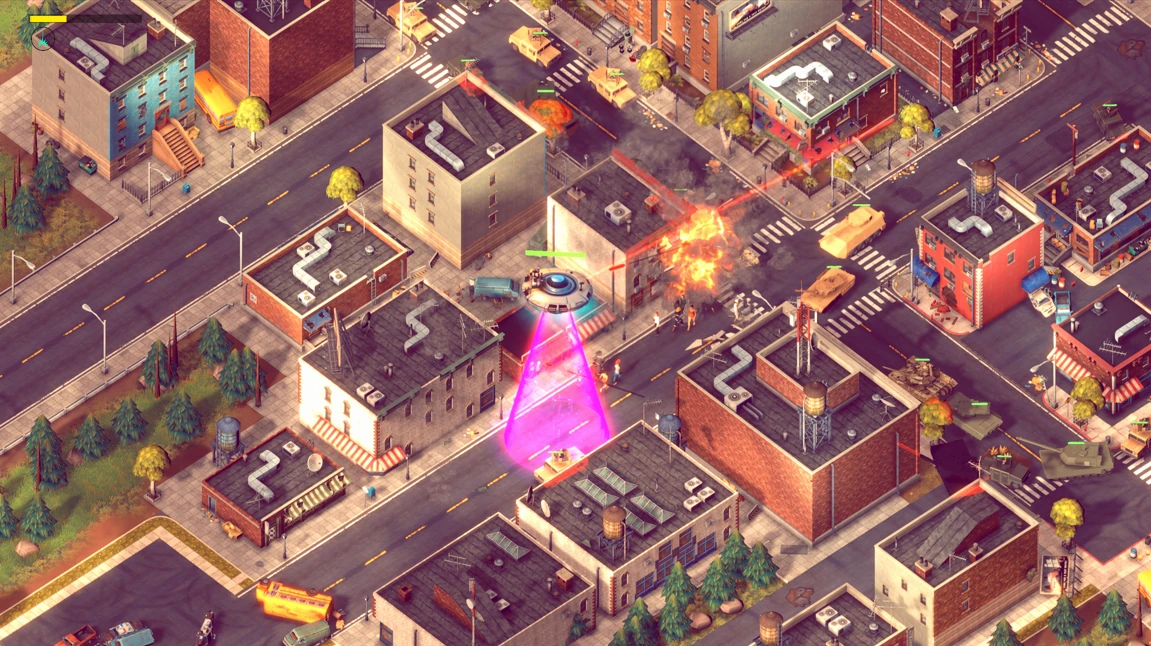
3. Early Visualizing Mechanics: The Destruction System
One of the most complex parts of Abduct 'Em is its destruction mechanism. Visualizing how buildings should crumble and react to the UFO's beam in the early prototyping phases is typically a labor-intensive task for VFX artists. SIFOR used Ludo to rapidly generate visual references and conceptual frameworks for these destruction sequences, allowing the developers to align on the "feel" of the physics before moving into full implementation.
The 3D Pipeline: From Prompt to Polished Asset
One of the most significant breakthroughs in the development of Abduct 'Em was the transition from 2D concepting to full 3D production. SIFOR utilized Ludo's 3D Generation tools to bypass the traditional, time-consuming modeling phase for a vast majority of the game's interactive elements.
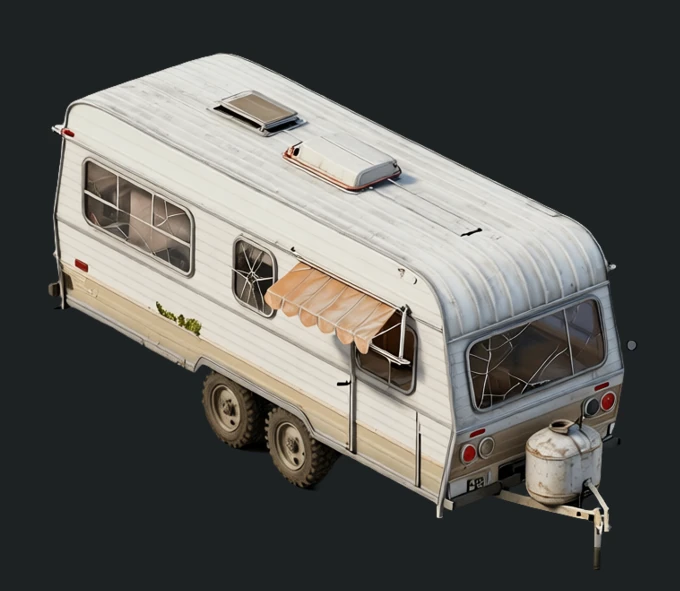
1. Designing the "Home Trailers" and Urban Assets
The game's environments are filled with "Home Trailers", modular, destructible residential units that serve as primary targets for the player. Instead of modeling these individually, SIFOR used 3D generators to produce a variety of trailer styles, ensuring that the suburban landscapes felt diverse and lived-in.
By inputting specific parameters for architectural style and wear-and-tear, the team could generate high-fidelity 3D meshes that were ready for texturing and engine integration in a fraction of the time.
2. The Hero Asset: The Main Character UFO
The player's UFO is the centerpiece of the Abduct 'Em experience. To make the craft feel unique, the team used 3D generation to iterate on various "Abductor" designs. This allowed SIFOR to experiment with different silhouettes, ranging from classic retro-futuristic discs to more aggressive, mechanical designs, until they found the perfect balance of personality and functional "engine-readiness."
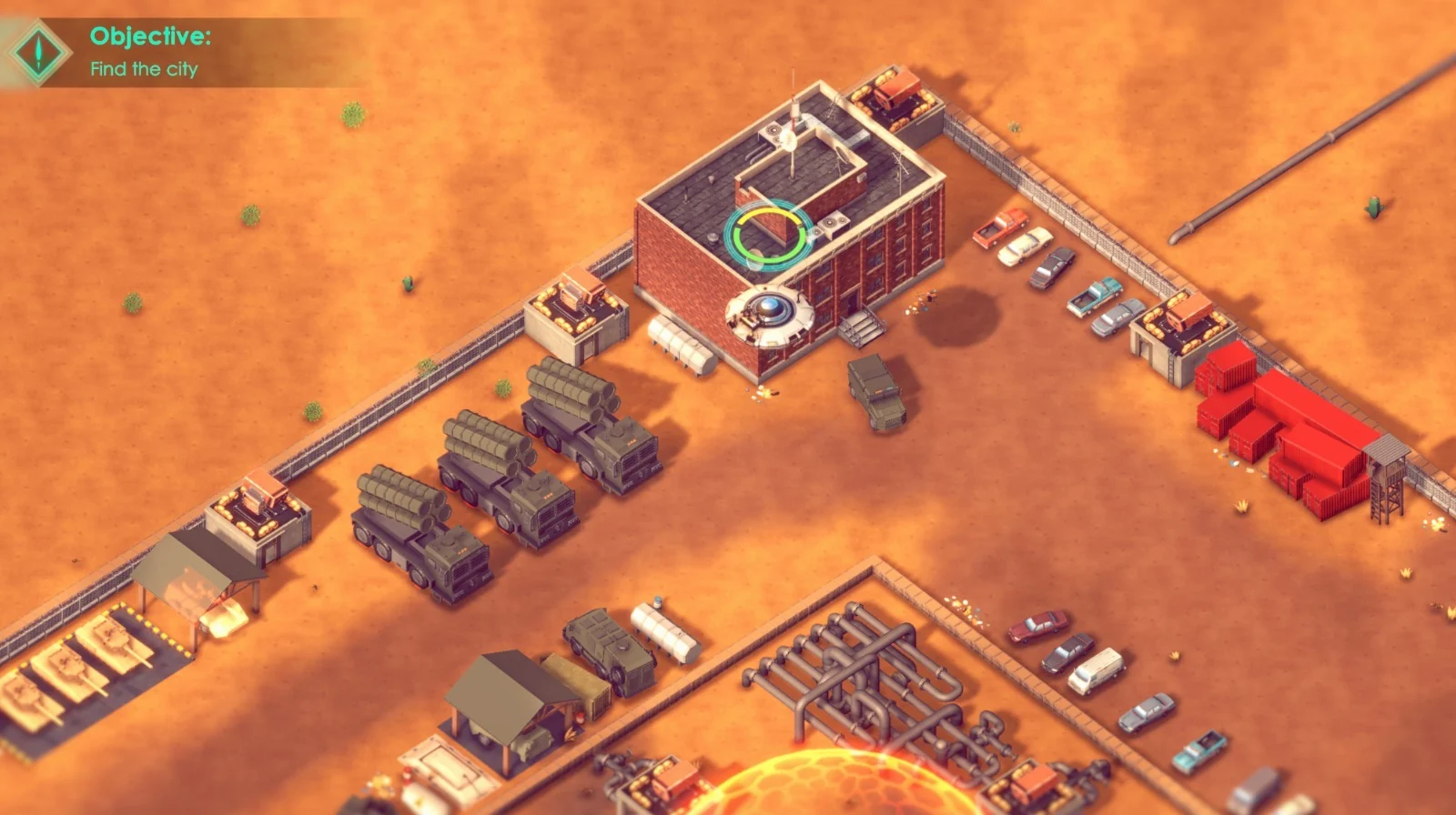
One frame, dozens of distinct props: missile trucks, tanks under canopies, shipping containers, parked cars and pipework, with the player's UFO lining up over the compound. Filling a sandbox at this density, biome after biome, is what the pipeline above was built to sustain.
What Made It Work
- Iterative Analysis: Using Ludo Score transformed "gut feelings" into actionable design decisions, helping the team prioritize content that maximized player engagement.
- Visual Cohesion: By generating both the main character and environment props within the same ecosystem, SIFOR maintained a consistent 16-bit, neon-infused aesthetic across the entire project.
- Prototyping Speed: Visualizing complex systems like building destruction in the "sketch" phase saved weeks of technical rework during the mid-production cycle.
From Concept to Steam
The result of this collaboration is a highly polished, content-rich experience that stands out in the crowded roguelike market. By leveraging AI not just as a shortcut but as a strategic partner in design and production, SIFOR has proven that even a lean team can deliver high-fidelity media that scales.
Experience the chaos for yourself:
- Play on Steam: Abduct 'Em
- Follow SIFOR: @SIFOR_GAMES