Echoes of Creation: 230+ Icons and a 24-Track Soundtrack for a Solo Online RPG
- Platform
- Steam (PC)
- Engine
- Godot 4
- Genre
- Online action RPG
- Release
- Early Access, May 2026
- Team
- Solo
- Ludo Tools
- Image Generator, Audio Generator, MCP
- AI Assistant
- Claude Code
Live online games are supposed to need teams. Running servers, a player-driven economy, raid bosses, guilds, hourly leaderboards, and a content cadence fast enough to keep a community fed: that is the job description of a studio, not a person.
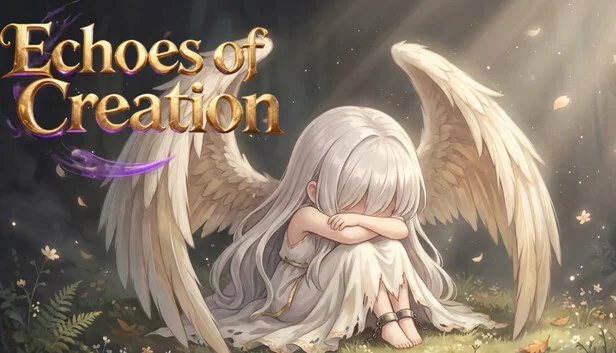
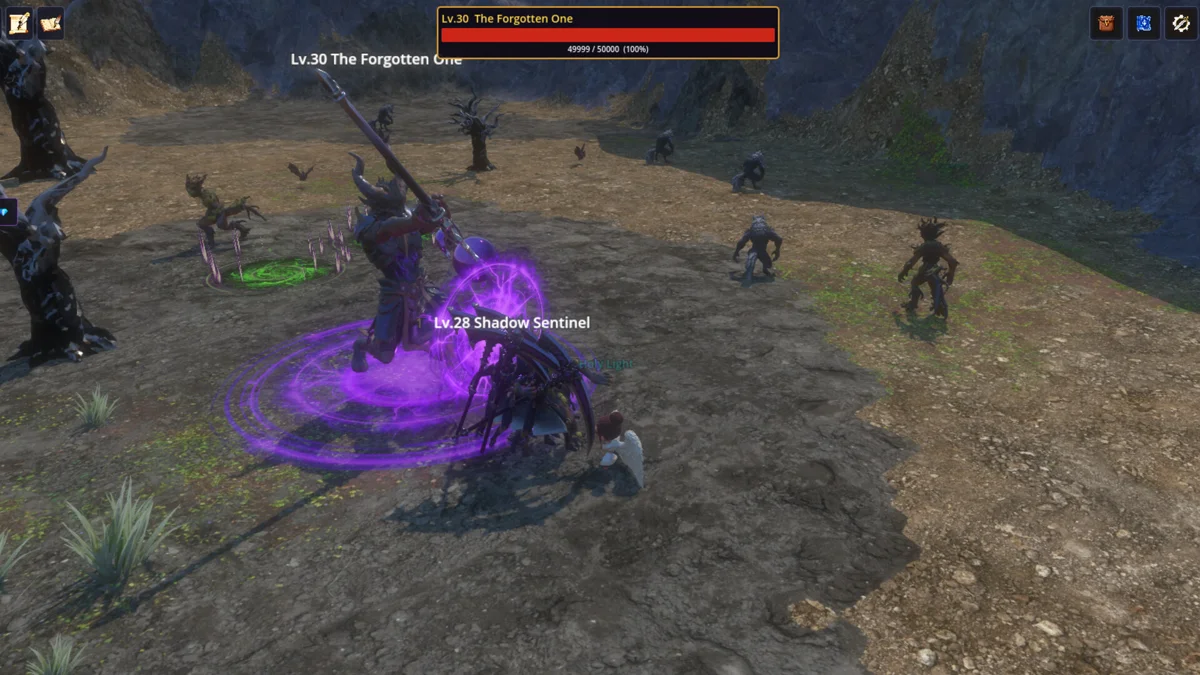
Echoes of Creation is that job done by one developer. Mark, the solo developer behind Torrano Dev, built it in Godot 4 as a love letter to grindy, stat-driven progression RPGs (MapleStory was a big inspiration), rebuilt as a 3D open-world game with real-time action combat, an auto-hunt system, four classes, deep itemization, and online multiplayer up to raid scale. It launched on Steam on May 29, 2026, and has been in live operation since, with new content shipping almost weekly.
A game of that scope has an obvious missing line item: the art and audio department. Every item needs an icon, every zone needs a theme, every boss needs a sound kit, and there was exactly one person to make all of it.
"Ludo was my art and audio department. One preset, one prompt library, 230+ icons and a 24-track soundtrack that all feel like they belong to the same game."— Mark, solo developer of Echoes of Creation
230+ icons from one locked preset
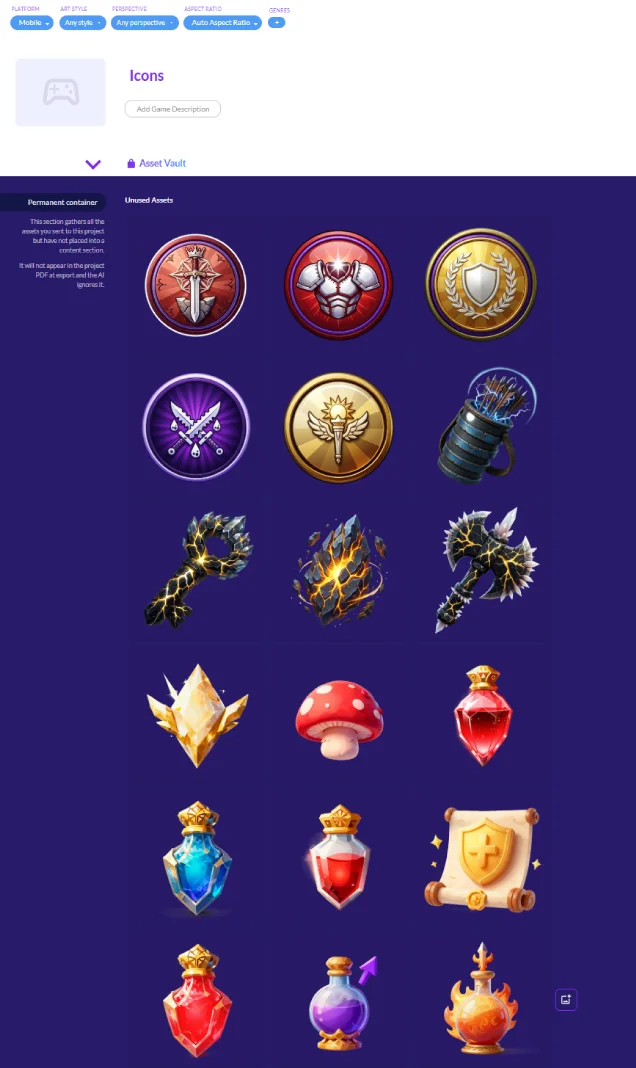
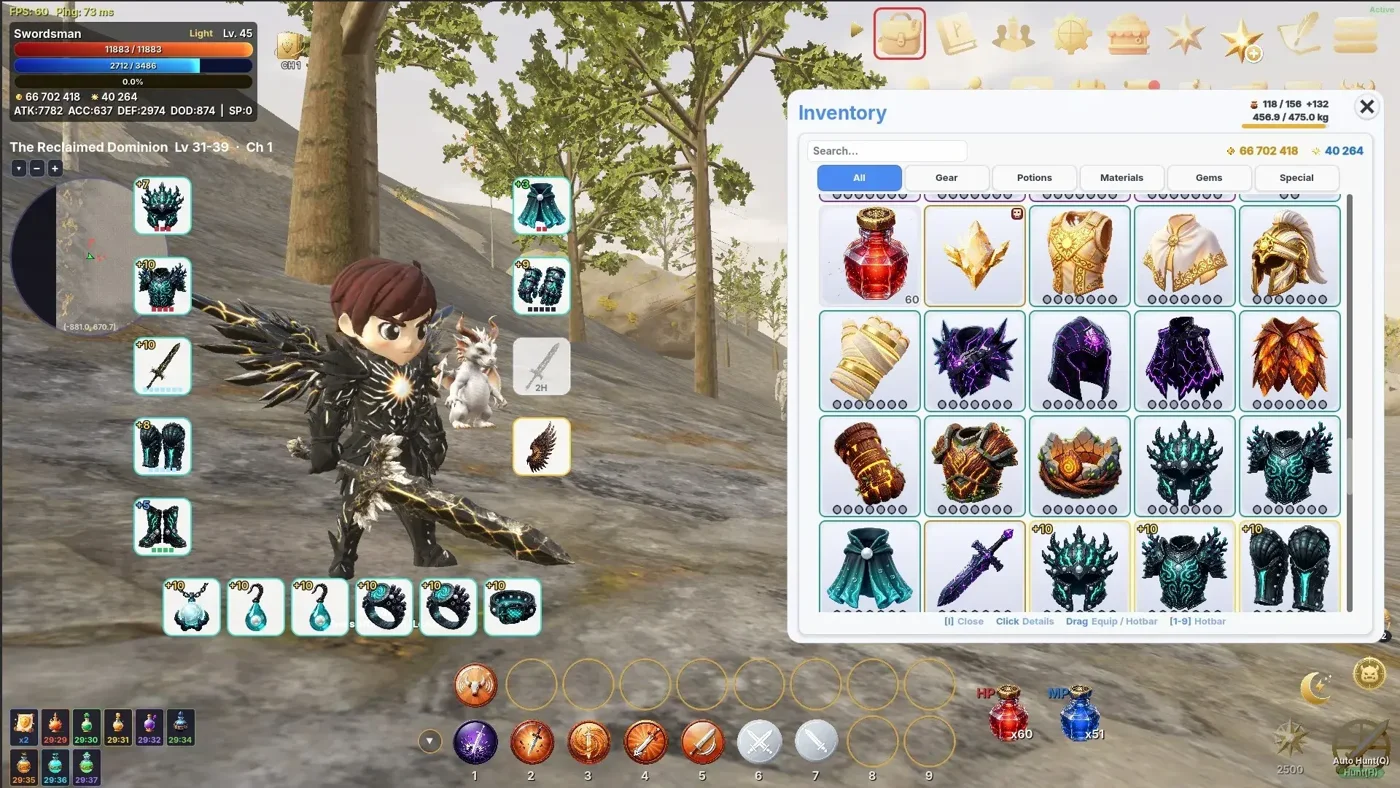
The icon problem is where the scale is easiest to see. Echoes of Creation shipped with over 230 icons in play: 194 items and 40 skills, plus HUD elements, badges, and banners. By Mark's latest count the game is now using more than 270, with the new sound effects on top, and he shrugs at the exact number because it grows with every content drop. Essentially all of them came out of Ludo's Image Generator.
The trick that made it work at scale was restraint: Mark locked in a single filter preset, Stylized 3D, square, and never changed it. Icons generated months apart still read as one coherent set. His workflow is prompt-file driven: a library of .txt prompt specs lives in the game's repo, one per icon batch: weapons, armor, accessories, potions, gems, materials. Generate in Ludo, trim, resize to 768×768, drop the file in with a filename matching the item ID.
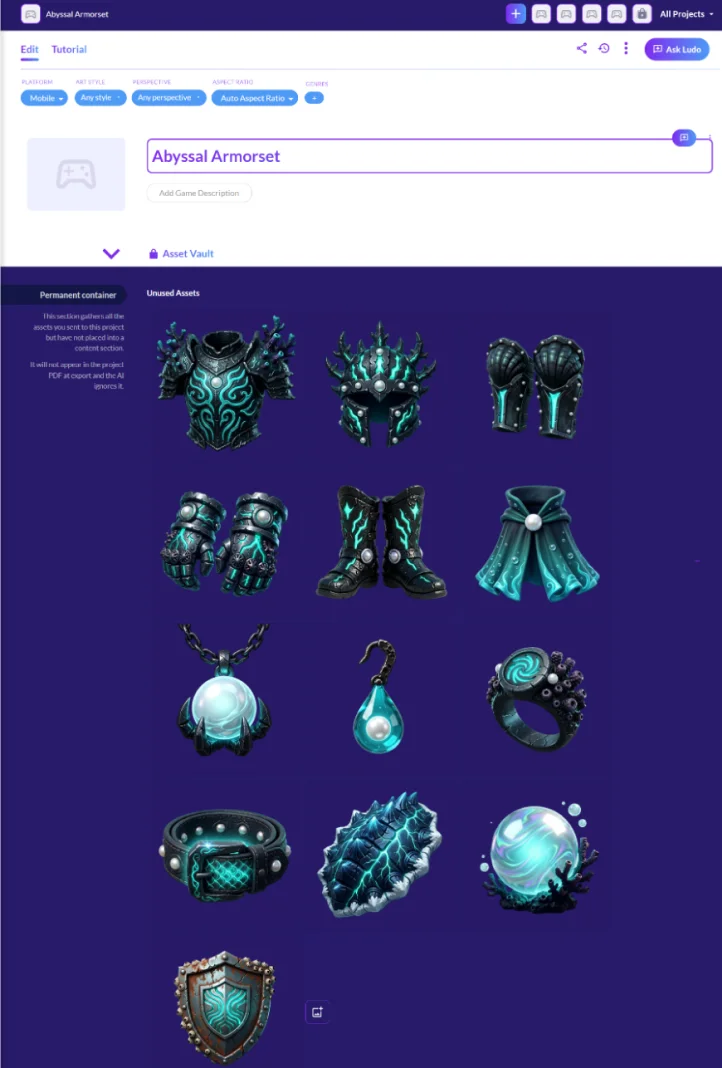
"A full 10-piece armor set goes from idea to in-game icons in under an hour. As a solo dev running a live game, that speed is the difference between shipping weekly and shipping quarterly."— Mark
The cost side is unglamorous in the best way. Mark ran a monthly Pro plan for his first couple of months, then switched to an Indie Annual plan, and its 3,000 upfront credits covered the entire icon library with room to spare. He generates icons, soundtrack and effects as he needs them, so the spend tracks the content schedule rather than the other way around.
Concept art that became the cast
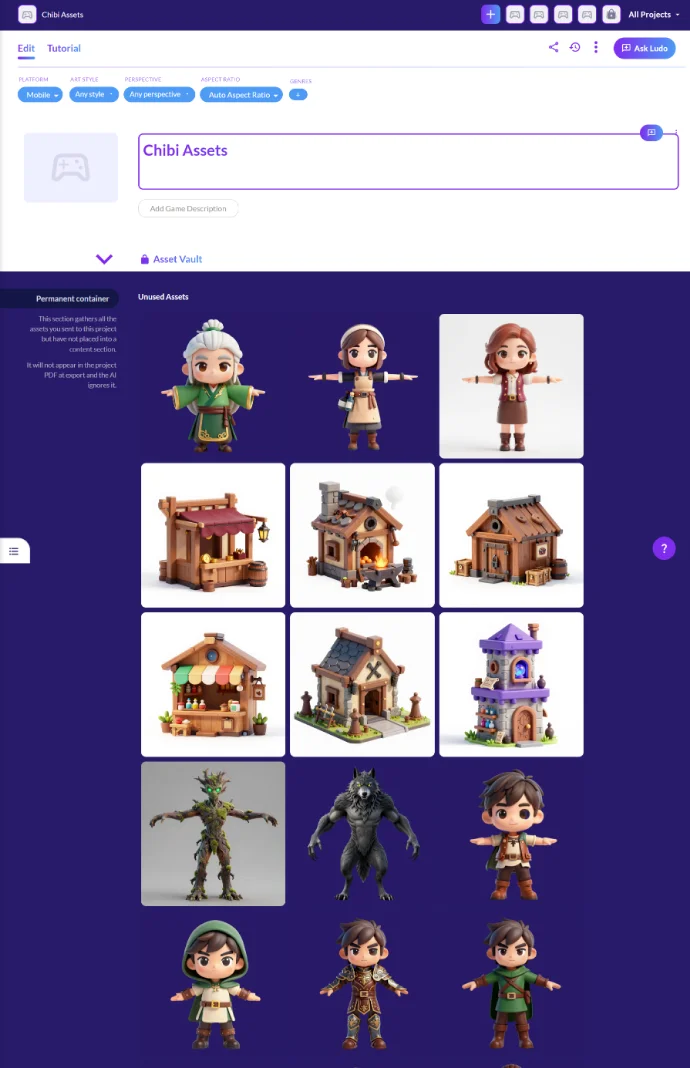
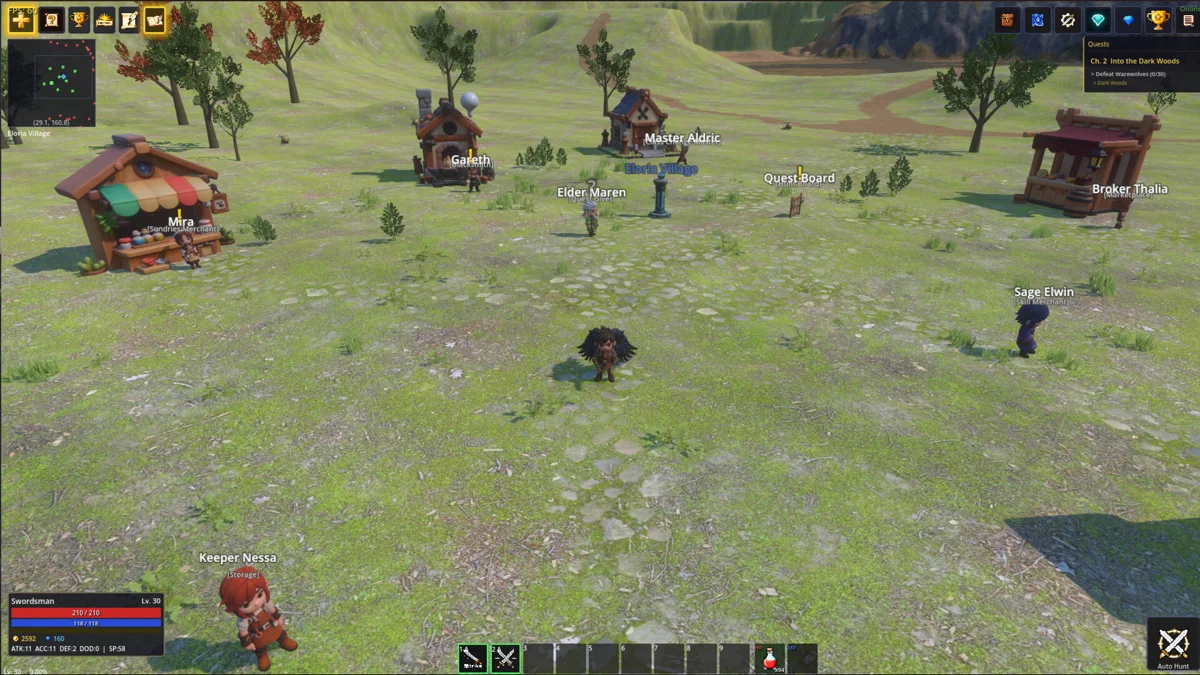
The icons are the current pipeline. The game's characters came from an earlier one: the original playable characters, monsters, and props were made with Ludo's image generation feeding image-to-3D. Concept images generated in Ludo defined the game's visual identity: the chibi-proportioned heroes and creatures that give an MMO-scale world its approachable look. That art direction still anchors everything the pipeline produces today.
An audio department made of written specs
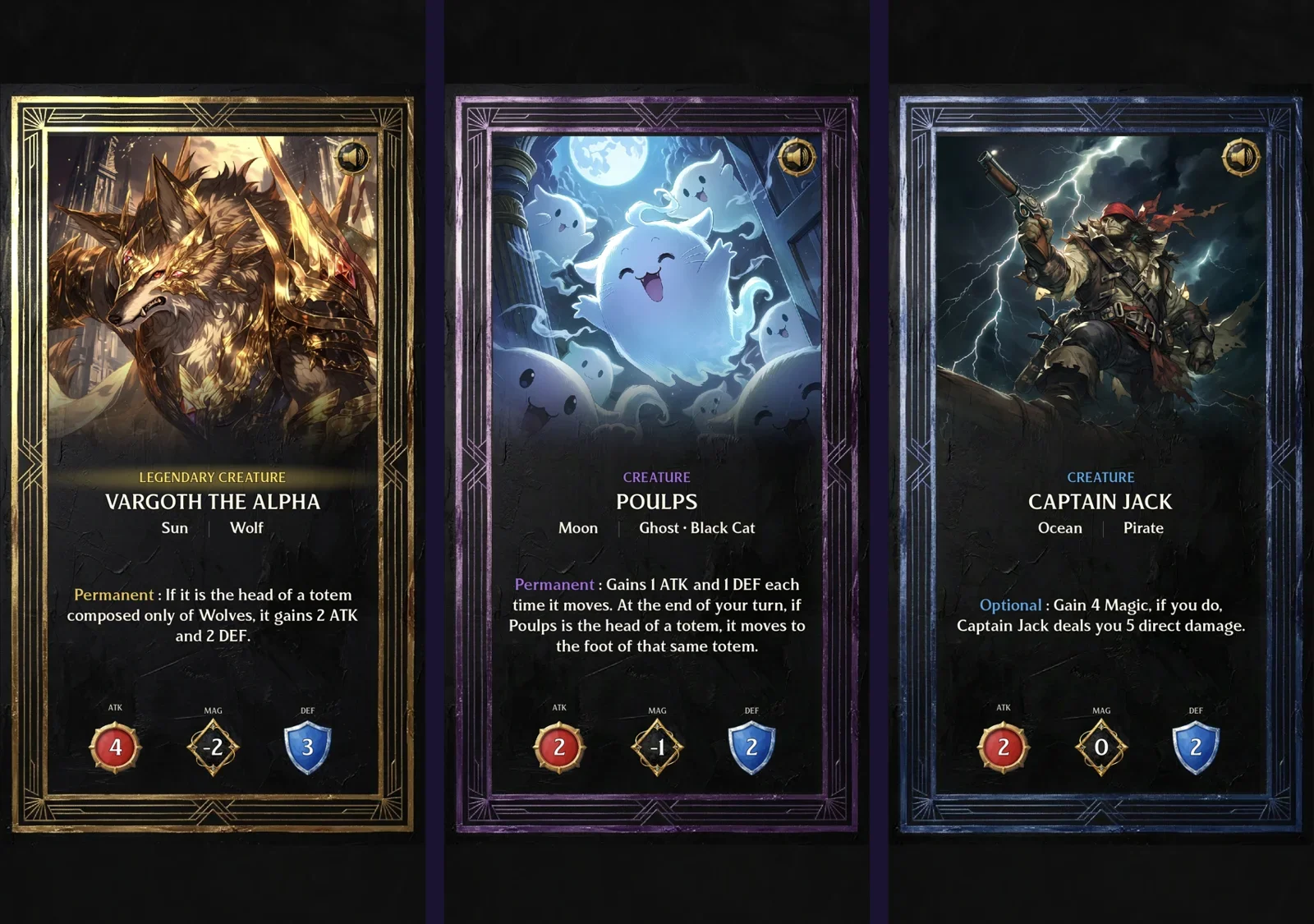
The audio side runs on the same discipline as the icons: written specs, not improvisation. Class attack sounds, boss ability kits, and UI feedback are generated with Ludo's sound tools from fairly cinematic prompt specs. The most telling example is Primordius, the game's apex boss, whose kit is designed around player learning: the ability telegraph is a rising rumble that deliberately never resolves, so players internalize it as a "dodge now" cue, with the impact as a separate sound.
The soundtrack went further. All 24 tracks of it are generated, each zone from its own written mood-and-instrumentation spec: bright pastoral strings for the starter forest, ominous choirs for the corrupted zones, epic percussion for raid and arena content.
The pipeline is a conversation
What makes this workflow unusual isn't just the volume. It's where it runs. Mark builds the game with Claude Code, and Ludo is wired directly into that workflow through the Ludo MCP. The AI assistant writes the prompt specs, saved as versioned .txt files in the repo, one per asset batch, and calls Ludo's generators directly. Asset production happens in the same conversation as writing the code that uses the assets; Mark's job is curating the results and wiring them into the game.
"Because the prompts came out of the same workflow as the code — Claude Code calling Ludo through the MCP — the specs were game-literate: the boss telegraph sound deliberately never resolves, so players learn it as a dodge cue. Ludo handled that nuance."— Mark
Consistency is the difference
Mark's bottom line isn't that generative tools made the game possible in the abstract; it's that consistency made the output usable. Locked style presets and reusable prompt specs are, in his words, what made the result feel like a game with an art direction rather than a pile of AI images. The curation stayed human: Ludo generated, he chose, trimmed, named, and shipped.
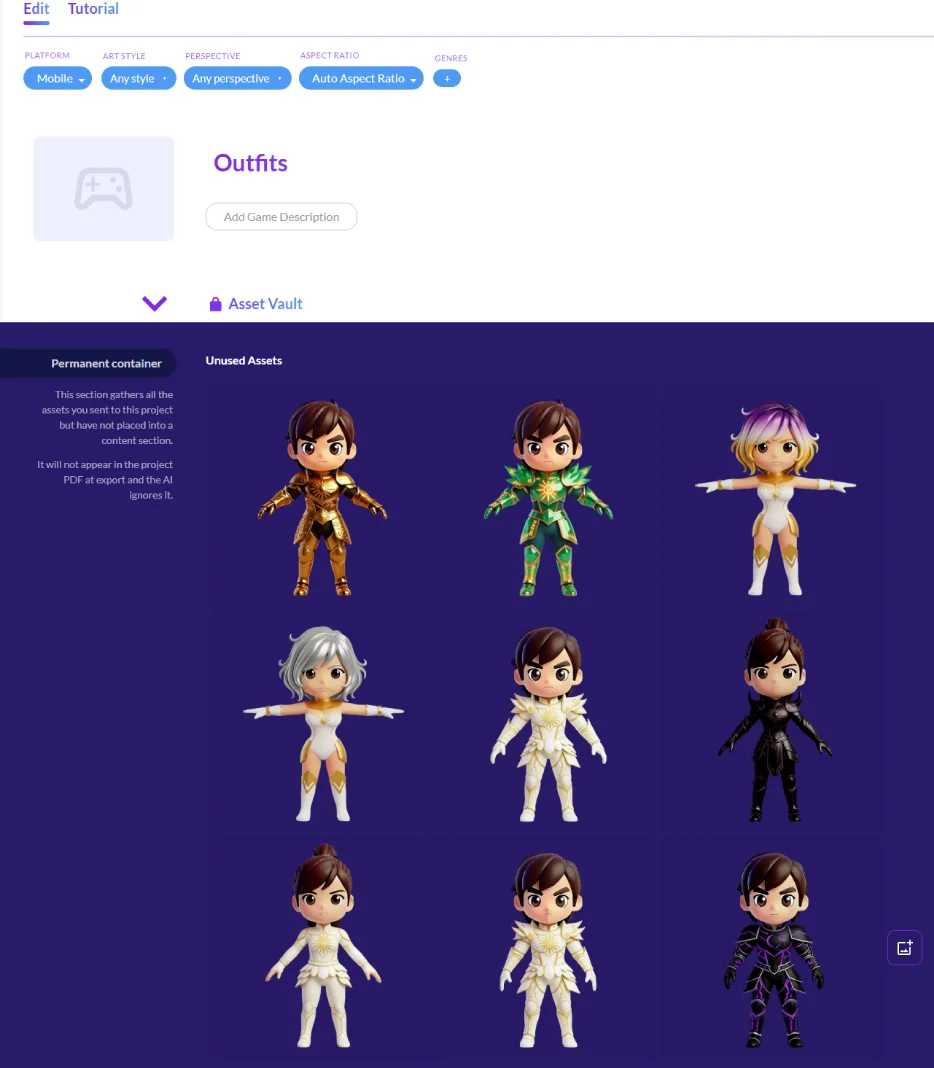
The result is a genuinely uncommon data point: a live, online, open-world multiplayer RPG with a running economy, raids, and weekly updates, shipped and operated by one person, because the work that used to require an art and audio team now compresses into a prompt workflow.
Play Echoes of Creation
Echoes of Creation is free to play on Steam, in Early Access, with four classes, gear enhancement and reforging, guilds, world bosses, a player-driven marketplace, and a story about the Creator's two firstborn: Eloria the Light, sealed away by Erevos the Dark, and the adventurer who sets out to free her.
Play Echoes of Creation on Steam
echoesofcreation.net
Join the community on Discord