Catverse Clicker: Adding Animation to an Idle Clicker Halfway Through Development
- Platform
- Android
- Genre
- Idle clicker
- Ludo Tools
- Sprite Generator
Most tools enter a project at the start, when the pipeline is being built and there's still time to design around them. Ludo didn't get that invitation.
Batuhan Pehlivan, co-founder and game designer at Kayalar Studio, found it deep into the development of Catverse Clicker, the studio's debut mobile game. By that point, the characters were done, the game was taking shape, and the team had already worked around the one thing that was missing: animation. His expectations going in were low. What happened next changed the quality of the final product in ways he didn't anticipate.
The game that almost shipped without animation
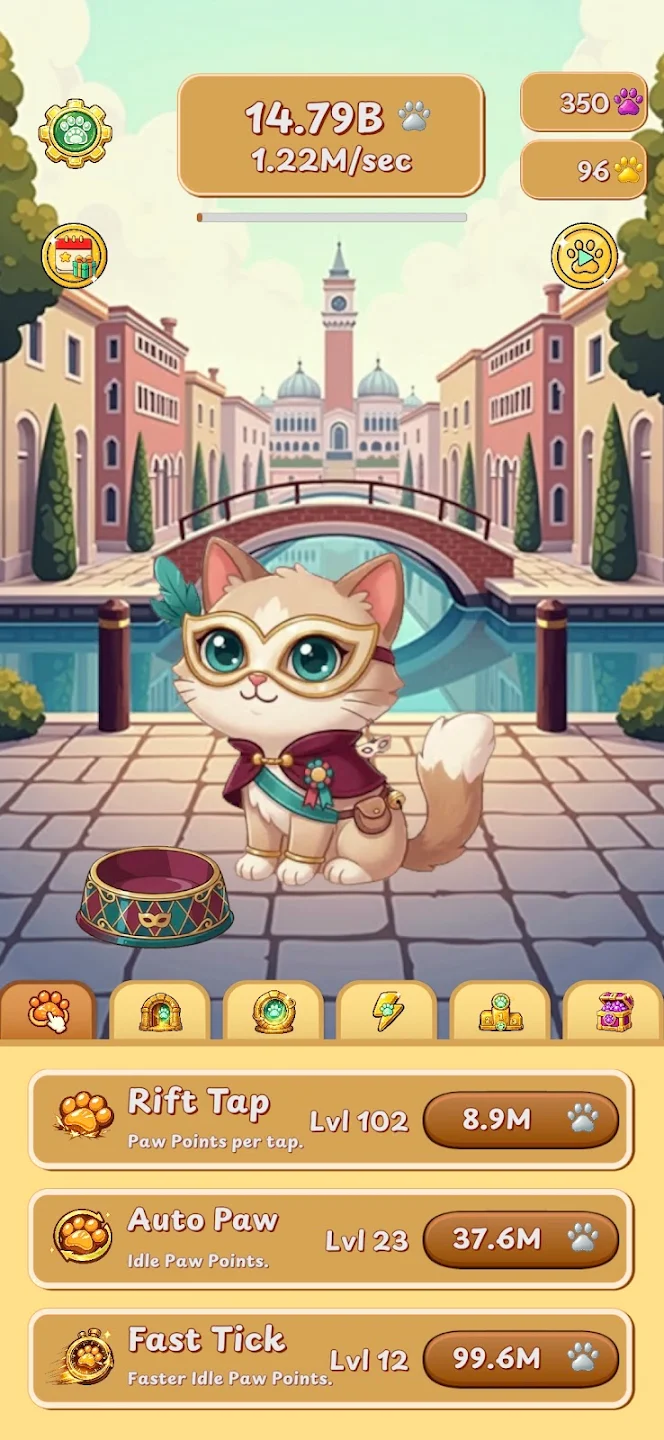
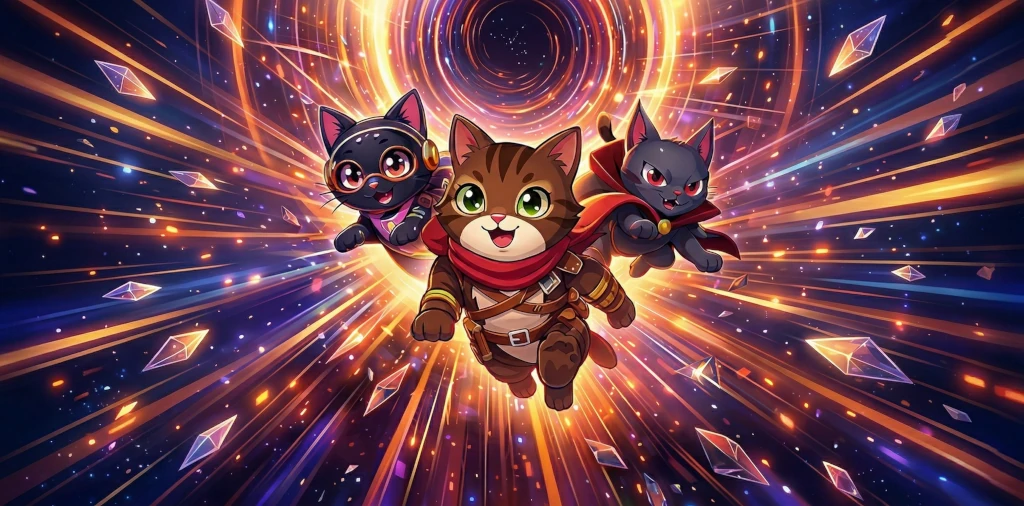
Catverse Clicker is an idle clicker built around themed cat characters. Players tap, earn Paws, upgrade their cats and shelters, and come back to find progress waiting for them. It's a genre built entirely on feel: the rhythm of interaction, the small hits of feedback, the sense that something is alive on screen.
For most of development, none of that liveliness existed. Every cat character was a static PNG.
"Before I found Ludo, our cat characters were static PNG assets. They technically worked, but the game felt lifeless. That was a serious problem for us, because in an idle clicker, the player is constantly interacting with the same screen, the same characters, and the same feedback loop. If those elements feel static, the whole experience feels flatter than it should."— Batuhan Pehlivan, Co-Founder & Game Designer, Kayalar Studio
The constraints were straightforward and hard: nobody on the team had animation expertise, and the project had almost no budget. Traditional animation pipelines were out. Hiring someone was out. Batuhan started looking for another way, without much hope of finding one.
Low expectations, then a quick reversal
Ludo came up during research. Batuhan tried the trial credits with no particular conviction.
"To be honest, I did not have very high expectations at first. But after using the trial credits for a few tests, I quickly realized that this was not just an interesting experiment. It could solve a real production problem for us."— Batuhan Pehlivan
He subscribed. He ran more detailed sprite generation tests. And in a short time, he understood how to use the system effectively. It was going to work.
"The results were much better than I expected."— Batuhan Pehlivan
What actually got built
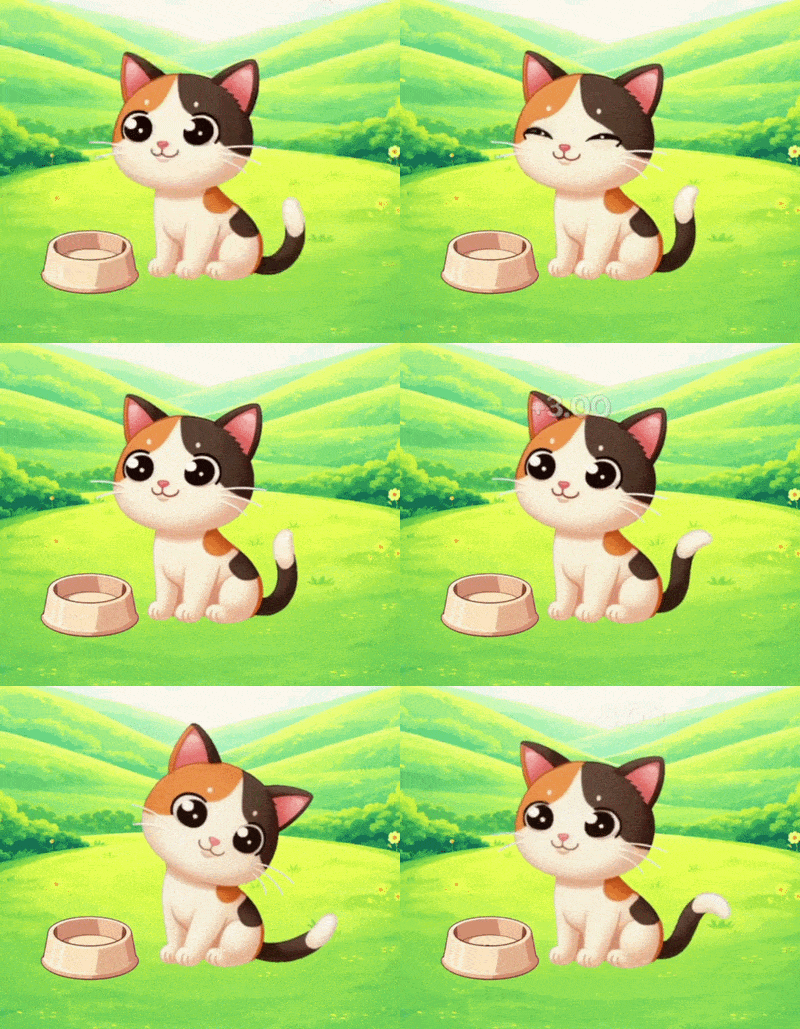
Catverse Clicker has 20 themed cat characters. Batuhan designed two animation types for each: an idle animation that plays constantly, and an interaction animation that fires when the player taps. On top of that, he built 20 bowl filling animations for the game's feeding mechanic, one per bowl design, to give players clearer visual feedback on a core interaction.
Sixty animations in total. He built and integrated all of them himself.
"In total, I created and integrated 60 different animations into the game by myself in less than 3 days. For a small team like ours, that speed was extremely valuable. From both a production and cost perspective, the result was far beyond what I expected."— Batuhan Pehlivan
The frame rate landed at 16 FPS with 4-second animation durations. The export tools gave him the control he needed to keep sync consistent across animations that were supposed to follow each other, fixing the position shifts and continuity problems that had come up earlier in the workflow.
Not just better-looking, better to play
The cats stopped being art placed on a screen. The feeding animations made actions feel like they meant something. The interaction animations made taps feel responsive. For an idle clicker, where the player does the same things hundreds of times, that shift in feel is not cosmetic.
"With Ludo, I was able to bring our cat characters to life through animation. That changed the game immediately. The cats no longer felt like static art placed on a screen. They started to feel like actual characters inside the game world."— Batuhan Pehlivan
The bowl animations made a similar difference. Filling a bowl became a small moment of satisfaction rather than a number changing. The interaction loop got tighter, and the whole experience felt more responsive.
"This was not only about making the game look better. It changed how the game felt to play. The animations made actions feel more rewarding, improved the sense of responsiveness, and helped the world feel more alive. What had started as a simple learning project suddenly felt much closer to a real product."— Batuhan Pehlivan
The design argument for keeping costs manageable
Batuhan's view on AI tools isn't evangelical. He's specific about what they did and didn't do for the project.
"Our view on AI tools in game development is simple: they are not there to replace creative judgment, and we never used them as a shortcut. What they did for us was increase production speed and reduce cost at a stage where both mattered enormously."— Batuhan Pehlivan
The consequence he keeps coming back to is one that rarely gets discussed in conversations about AI tooling: what low production cost does to design decisions downstream.
"When development costs stay manageable, you are less likely to be pushed toward over-monetization decisions just to recover production spending. That helped us keep player experience as the first priority. In our case, low cost and high speed did not reduce quality. They allowed us to turn those gains into richer content and a more rewarding game for the player."— Batuhan Pehlivan
What comes next
"Ludo entered our pipeline late, but it still changed the final quality of the game in a very visible way. That is why I see it as more than just a tool for experimentation. For small teams, especially those trying to move fast without large budgets or specialized roles, it can become a real production advantage."— Batuhan Pehlivan
And he only used one part of it. The sprite generation tool was the entry point, picked up late, with no time to explore anything else. For a next project built with Ludo from the start, the ceiling is higher.
Play Catverse Clicker
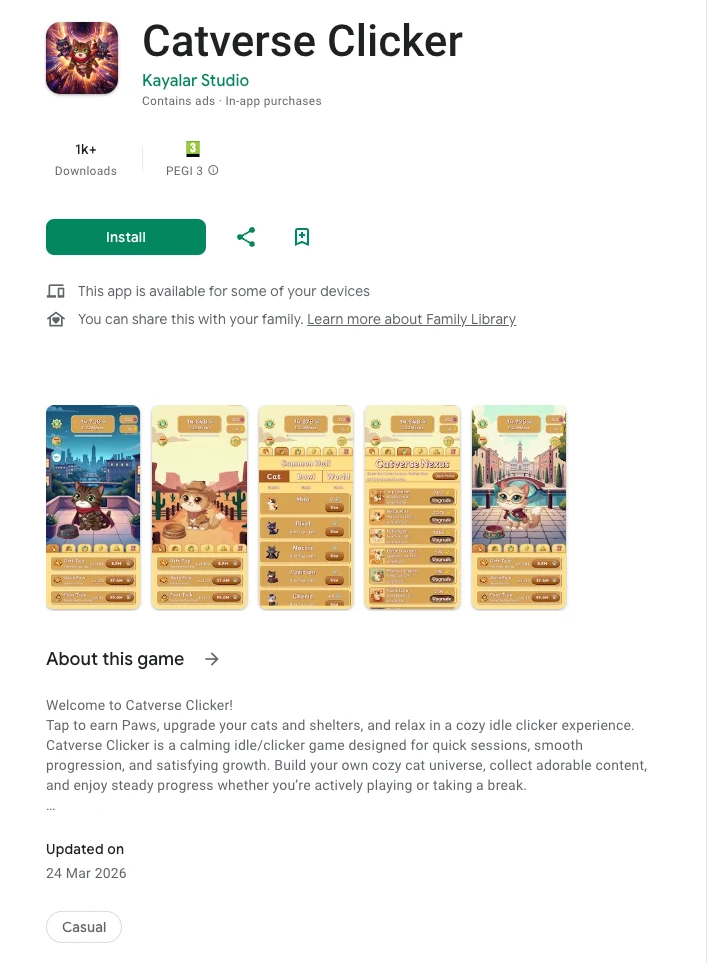
Catverse Clicker is available now on Android. It's a free-to-play idle clicker with 20 themed cat characters, idle earnings, upgradeable shelters and visual themes, and optional rewarded ads. No paywalls blocking progression.