Veridium: Final Pulse, Keeping a Cyberpunk Card Battler's Art Consistent
- Platform
- Steam (PC)
- Genre
- Card battler, visual novel
- Release
- Coming 2027
- Team
- Solo
- Ludo Tools
- Image Generator
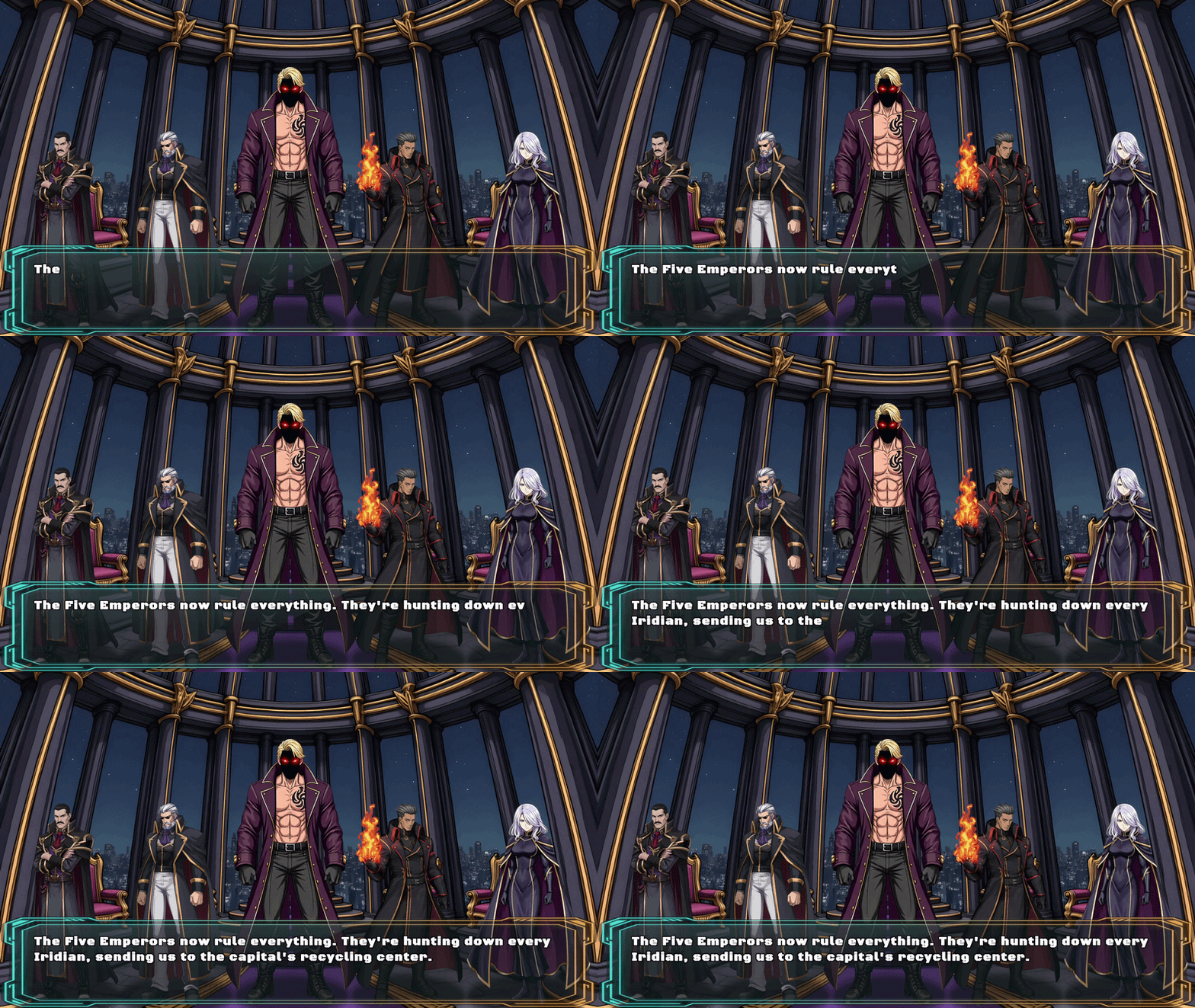
Veridium: Final Pulse is a cyberpunk card battler crossed with a visual novel, in development by solo developer Mizar42 and coming to Steam in 2027. The story is linear, but the deck is not: you buy cards in shops and take cards and whole decks from opponents you defeat, so narrative progress and deck power are the same climb. Combat plays out on an eight-zone grid of front-line and support positions, with a positional "Connector Network" mechanic the developer compares to Yu-Gi-Oh's Link Monsters, plus original twists like counterattacks.
The world splits into two peoples with opposed philosophies: the Veridians, the fully-human population, and the Iridians, a half-human half-machine species whose right to exist is the story's central fight. The Five Emperors, who reject technological progress and hunt the Iridians, stand between the player and the end of the game. Two societies, two ways of life, and, by design, two distinct visual identities that have to share every screen.
"Like they came from different projects"
That design goal is where the trouble started. A card game with a visual novel wrapped around it needs a lot of art surfaces: character sprites for dialogue scenes, full-size battle sprites, card illustrations, backgrounds for shops, throne rooms and control rooms. Early on, each of those was a fresh start: a new prompt, generated on its own, with nothing tying it to what had already been made. Mizar42 got the feedback every solo developer dreads.
"Early on, I got direct feedback that the game's art lacked visual coherence; characters and environments felt like they came from different projects, since concepts were being generated independently each time."— Mizar42, solo developer of Veridium: Final Pulse
Note the reason he gives, because it is the whole lesson: the assets were generated independently each time. Ask for one image and you get one image. Ask for sixty, one at a time, with nothing carried between them, and you get sixty separate answers to sixty separate questions. That is a property of prompting from scratch, not of any particular generator, and it is the most common failure mode of AI-assisted game art: each image looks fine alone, and the game they add up to looks like a collage. The fix is never a better single prompt. It is giving every generation something to hold onto. Doing that by hand, as a solo dev, across a growing roster of characters and scenes, was not a realistic option.
Step one: find the style in Ludo
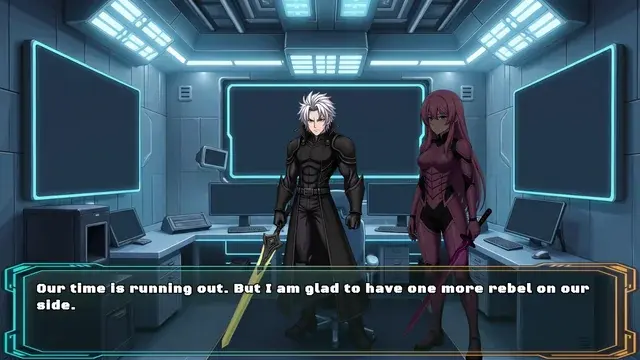
Ludo's job in the pipeline was direction and ideation. Before committing to a final look, Mizar42 used Ludo's image generation to explore concepts for character sprites and backgrounds: what a Veridian officer looks like next to an Iridian rebel, what a neon market or an Emperor's throne room feels like, which of many possible directions the game should commit to.
"I used Ludo for concept art and art direction; generating initial concepts for character sprites and backgrounds to explore designs before committing to a final look."— Mizar42
The brief made that exploration harder than a single mood board. Veridium's two societies are designed to look like opposed philosophies: the Veridians, fully human, and the Iridians, half-human and half-machine, each with a visual identity of their own. Those identities are not decoration, they carry the story's central conflict, and they have to share every dialogue scene, battle screen and card frame without the frame falling apart. Exploring both looks side by side, cheaply, until they clicked against each other is exactly the kind of iteration that is painful to do by hand and fast to do in a generator.
The output of that phase was not just images. It was a decision: an established style, embodied in a set of concepts the developer had generated, refined and curated. That set turned out to be the raw material for solving the coherence problem.
Step two: turn the style into a rule
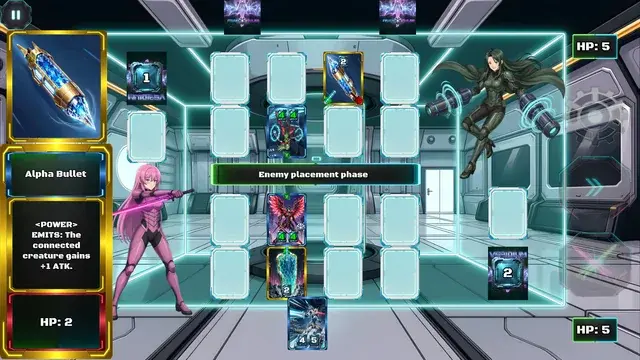
So Mizar42 gave his generations something to hold onto. He took the curated set of his own Ludo-generated and refined images and used it to train a small custom style model. A model like that has no taste; it cannot invent a look, it can only repeat one that already exists. The look it repeats is the one built in Ludo.
That is one way to do the enforcement step, and on a project this size it is a reasonable one. It is worth saying plainly that it is not the only way, because the principle matters more than the plumbing: every asset after the first should be generated from something, not from a blank prompt. Inside Ludo that is what the reference modes are for. You can generate from up to two reference images and take their subject, their style, or both, so the curated set becomes the input to the next asset instead of a folder you hope to match by memory. Same idea as a trained style model, one step earlier in the pipeline: the images you already approved become the instruction.
"I trained [it] using a curated set of my own Ludo-generated and refined images, so new assets, new characters, new backgrounds, could be generated consistently in that same established style instead of drifting each time."— Mizar42
From then on, adding a character or a scene meant generating inside the established identity rather than gambling on a fresh roll. The style holds across very different surfaces: full-size battle sprites, dialogue portraits, and even the chibi-scale overworld characters below all read as the same game.
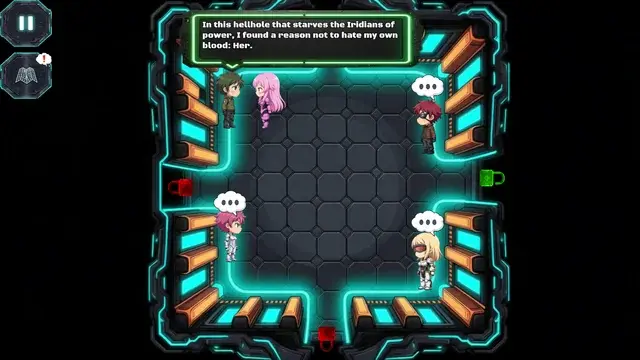
"That combination, Ludo for direction and ideation, a custom [model] for consistency, is what I think actually solved the coherence problem."— Mizar42
The game the pipeline feeds
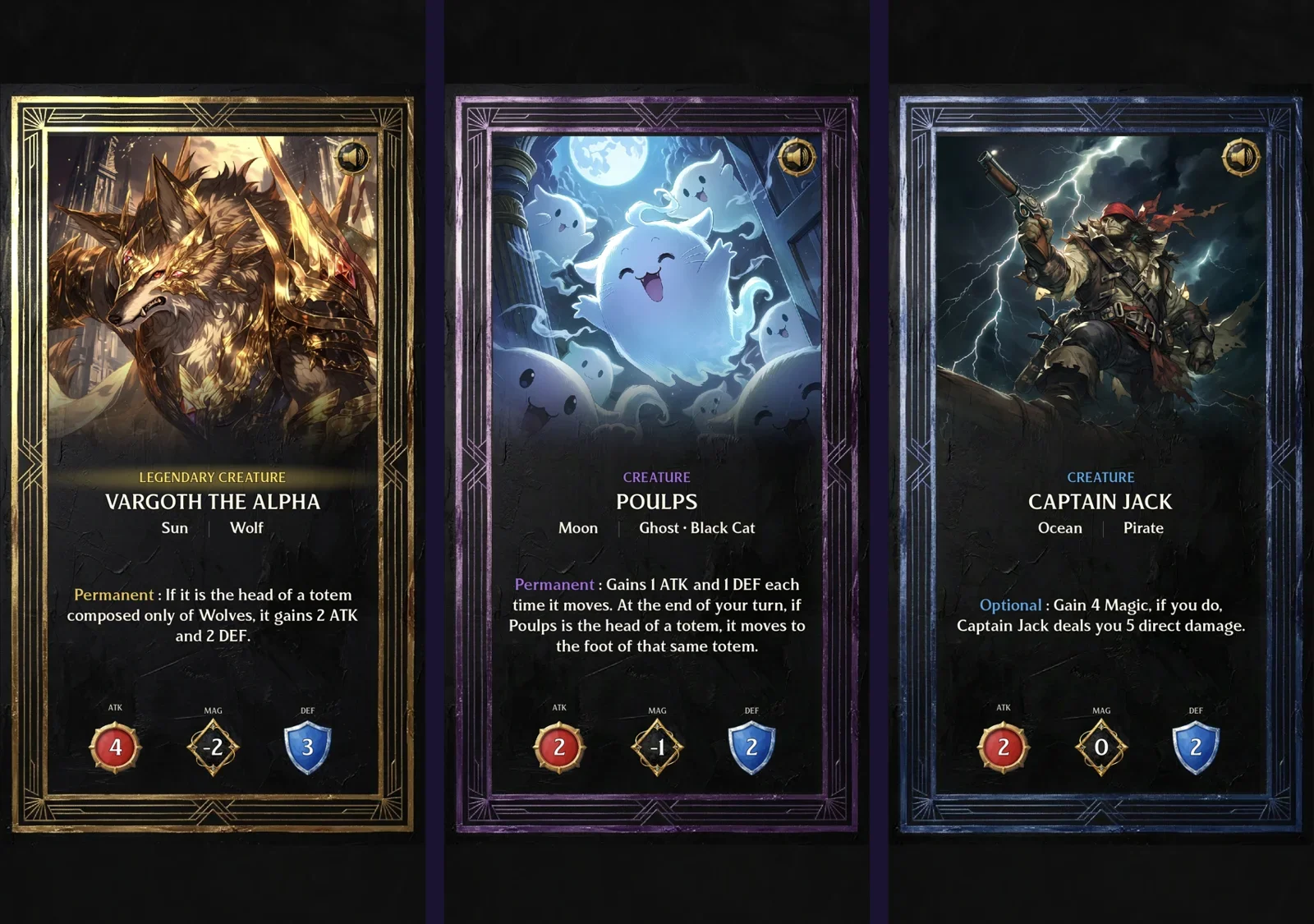
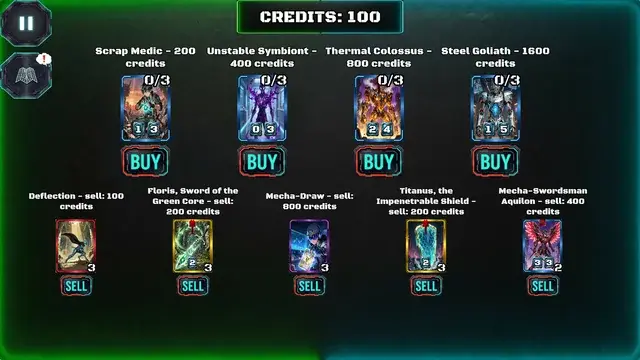
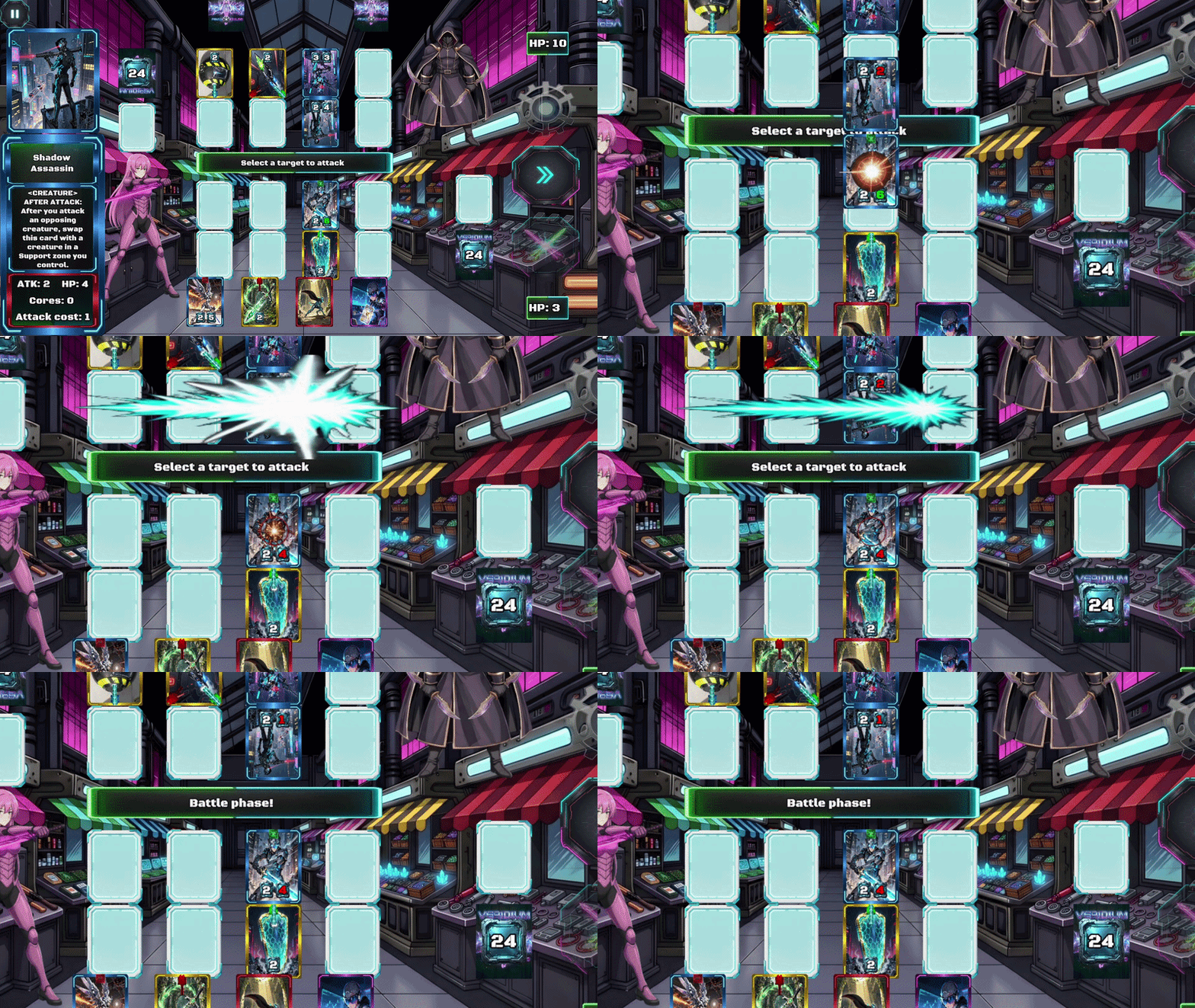
The art surfaces keep multiplying as the game grows, because Veridium's deck economy touches everything. Shops sell cards for credits; defeated opponents surrender cards and decks; every one of them needs an illustration that belongs to the same world as the sprites fighting over it.
Building the identity, not outsourcing it
Mizar42 is precise about what the tools did and did not do. Every generated element in Veridium was reviewed, curated and manually refined; the machines proposed, the developer decided.
"It's not that AI designed the game's art; it's that I used it to build and then enforce a visual identity I could keep applying across a growing roster of characters and scenes, something that would've been much harder to keep consistent by hand as a solo dev juggling art alongside everything else (design, code, marketing)."— Mizar42
That is the part worth stealing from this story, whatever your stack: visual coherence is not a property of any single generation, it is a property of the pipeline. Find the style first, in a tool built for exploring direction, while the cost of changing your mind is still a click. Then make the style the rule, so every asset the game asks for later is generated inside the identity instead of gambling against it.
Where to find Veridium: Final Pulse
A cyberpunk card battler crossed with a visual novel, where the road to the Five Emperors is paved with the decks of everyone who stood in your way. Coming to Steam in 2027; you can wishlist it now to follow the project.